NERIS Newsletter 8th issue

NERIS-Newsletter-8-2014-11-miniThe 8th issue of the NERIS Newsletter is now available. This edition is dedicated to the recent NERIS activities, cooperation with European research platforms on Radiation Protection R&D and the announcements.

The Newsletter includes:

• Editorial
• Feedback on the Fifth NERIS General Assembly
• International Training Course on « Preparedness and response for nuclear and radiological emergencies » in Mol
• Training Course on « Late Phase Nuclear Accident Preparedness and Management” in Gomel
• Cooperation with MELODI, ALLIANCE and EURADOS at the occasion of the Sixth International MELODI Workshop in Barcelona
• Second set of recommendations from the Japan Health Physics Society on radiation protection issues after Fukushima accident
• Announcements

Updated version of the NERIS Strategic Research Agenda

A new version of the NERIS Strategic Research Agenda is available. A consultation process is now engaged. In order to prepare a strategic vision of radiation protection research in Europe with other Platforms (MELODI, ALLIANCE, EURADOS), we need to select a list of high priorities and also to rank these priorities.

As member of the NERIS Platform you are invited to consult the document and fill the grid to select research priorities.

The grid contains two columns: the first column allows ranking the priorities of the SRA with three to five priorities and the second column allows selecting the priorities in terms of synergetic issues with the other platforms for the second OPERRA Call.

The grid should be sent insofar as possible before the Fifth General Assembly (June 27) or by 15 July at the NERIS Secretariat.

Download the updated NERIS SRA

Download the grid

Fourth NERIS General Assembly – 21st May 2013, Madrid (Spain)

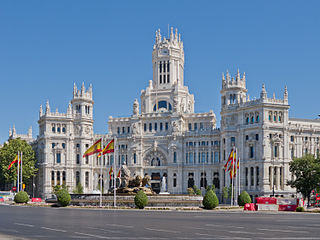
Palacio de Comunicaciones (Wikipedia, by: Kadellar, licence: Creative Commons Attribution-Share Alike 3.0 Spain)The Fourth General Assembly of the NERIS Platform was held on the 21st of May 2013 at the Technical University of Madrid (UPM), Spain.

29 persons participated to the meeting.

The new Management Board has been elected for a three year period.

The activities of the NERIS Platform have been reviewed:

  1. Working Group 2 on Involvement of Local Stakeholder (Deborah Oughton – UMB)
  2. Working Group 3 on Contaminated Goods (Sylvie Charron -IRSN)
  3. R&D Committee (Frank Hardeman – SCK CEN)

Download the Agenda of the Fourth General Assembly (including list of participants)

Download the Minutes of the Fourth General Assembly

PREPARE (WP6) Research Workshop – 28-29 November 2013, Lisbon (Portugal)

28-29 November 2013

First Announcement of the PREPARE (WP6) Research Workshop: “Managing complexity in nuclear accidental situations : Experts interacting with experts and society”

320px-Lisbon 10064 Lisboa Praça Luís de Camões 2006 Luca GaluzziNuclear emergency and post-emergency situations produce complex challenges regarding nuclear safety, radiological protection, radioactive waste management, but also for almost all activities of society and lifestyles (in the contaminated areas and beyond) that are affected by the accidental development, by (potential or actual) dispersion of radioactivity in the environment and in the goods. While many actors seek to find the information they need to make their everyday decisions, the issues at stake remain complex and multidimensional and the contribution of experts, the way they interact together and with the society and the media is a crucial dimension of accidental and post-accidental situations. The PREPARE WP6 Research program on « Information and participation of the public » is investigating the conditions and means for pertinent, reliable and trustworthy information to be made available to the public in due time and according to its needs in the course of nuclear emergency and post-emergency contexts, according to the principle of the Aarhus Convention on information, participation of the public and access to justice in environmental matters.

The workshop « Managing complexity in nuclear accidental situations – Experts interacting with experts and society » will address the questions of the management of complexity in emergency situation, linking the societal needs of information within the sphere of interacting experts along the development of the crisis. This workshop is the first of a series of three events that will successively focus on a specific sphere of information identified in the emergency and post-accident management situations:

  1. the emerging system of expertise (WP6.1),
  2. the community information system at territorial level (WP6.2) and
  3. the conventional and social media (WP6.3).

Download the program
PREPARE (WP7) Table-Top Exercice – 11-12 December 2013, Ljubljana (Slovenia)

11-12 December 2013

First Invitation to the PREPARE (WP7) Table-Top Exercice: “Monitoring a large scale cross border contamination in the aftermath of a nuclear accident”

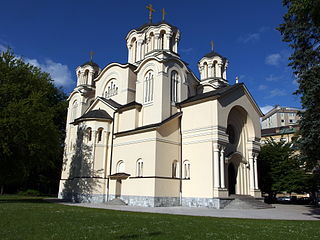
Ljubljana - Photo (CC) Mark AhsmannThe Table-Top Exercise on “Monitoring a large scale cross border contamination in the aftermath of a nuclear accident” is organised within the FP7-project PREPARE, WP7 Training courses, dissemination of knowledge and exercises.
In the event of a nuclear or radiological emergeny, the aim of the emergency monitoring and measurement strategy would ultimately be to produce a radiological contamination map of the area affected to guide radiological evaluators and decision makers in optimizing the protection strategy recommended for the public. The results of any emergency monitoring programme are likely to take days or weeks to acquire and collect data, according to the extent of the contamination and the characteristics of the environment. Many emergency teams will be involved, especially in the case of an accident with the transboundary impact affecting different countries.

The main goal of this table-top exercise is to disseminate the existing emergency preparedness plans for emergency monitoring on a large scale contamination, based on a hypothetical accident scenario affecting different countries and identify possible pitfalls.

Download the invitation

CLIN du Blayais and NERIS-TP post-accident Workshop – 12-13 September 2013, Bordeaux (France)

12-13 September 2013

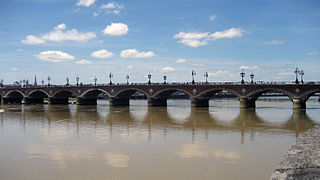
Bordeaux Le pont de Pierre sur la Garonne (by Maarten Sepp)A French workshop has been organised in Bordeaux on 12-13 September at the initiative of the ANCCLI (the French Federation of Local Commissions of Information), the CLIN (Local Commission of Information) of Blayais and the NERIS-TP.
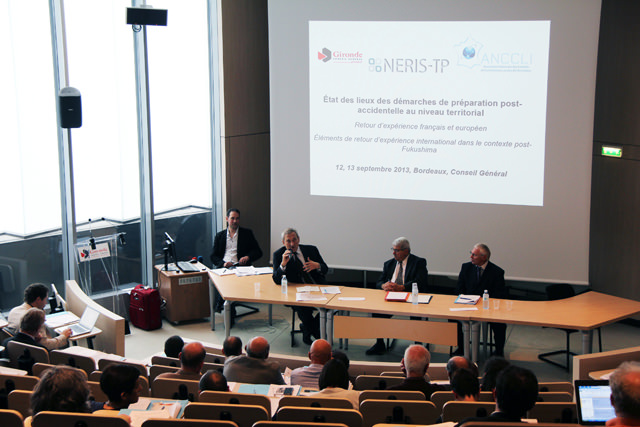
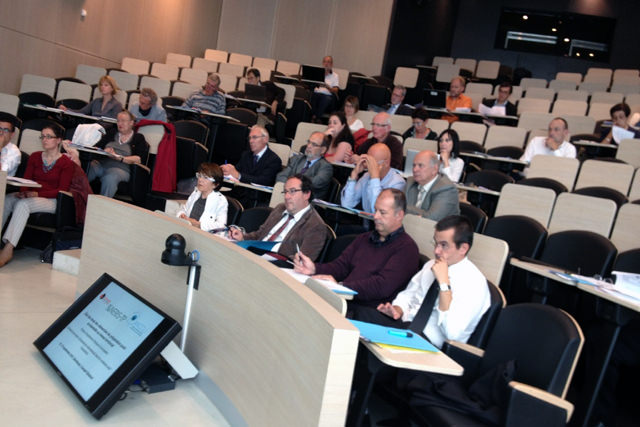
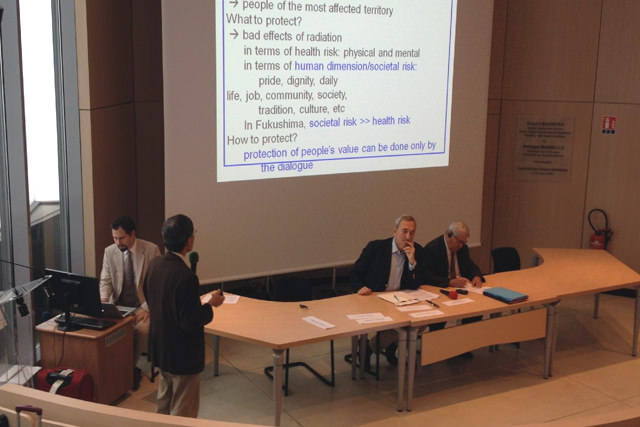
The local-national workshop on review of post-accident preparedness processes at the territory level aimed to make an inventory and to try to assess initiatives for post-accident preparedness in the European context at the local, regional and national levels, in France and other European countries. Elements of experience feedback from the post-Fukushima situation in Japan have been also presented; notably how different stakeholders are involved in some initiatives. The workshop provided an update on European approaches to research and experimentation on preparedness for post-nuclear accident situations at the European level.

The program and the presentations are available on
the ANCCLI website.


Radioprotection revue, Vol 48, issue 5: First NERIS Platform Workshop outcomes

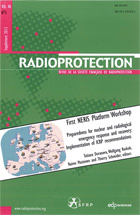
Radioprotection, Vol 48, issue 5, coverThe outcomes of the First NERIS Platform Workshop on practical implementation of the new ICRP recommendations have been published in a supplemental issue (Vol. 48, issue 5) of the Radioprotection revue.

Background

The European Platform on Preparedness for Nuclear and Radiological Emergency Response and Recovery (NERIS platform) was established in June 15, 2010. The Mission of NERIS is to promote the involvement of different stakeholders and improve public confidence in capabilities of the key players in management of nuclear and radiological emergencies in Europe. The NERIS platform encourages European, national, regional and local authorities, technical support organisations (TSOs), operators, professional organisations, research institutes, universities, non-governmental organisations (NGOs), and national and local stakeholders to co-operate in emergency management, and to facilitate access to expertise and technology in maintaining competence in the field of nuclear and radiological emergency management for the benefit of European countries and citizens. The vision is that, by 2015, the NERIS association will be self-sustaining and, by 2020, all European members of the association will share common views and ap- proaches and developing and using compatible technology and methods for con- sequence management of the emergencies. the NERIS Platform has, in March 2012, 43 member organisations representing stakeholders with a wide range of backgrounds, e.g. authorities, emergency centres, research organisations and the academic community. a Strategic Research Agenda (SRA) will provide the basis for priorities of future research and development in order to achieve the vision.

You will find the Table of contents and all articles on this page.

OPERRA e-Survey: Take this opportunity to have your say on European radiation protection research priorities

We are please to invite you to respond to the OPERRA e-Survey for expressing your view on the European radiation protection research priorities. This e-Survey is proposed in the framework of the EC funded Open Project for the European Radiation Research Area (OPERRA) aiming at establishing long-term European research programmes in radiation protection.

Among the topics addressed in this e-Survey, you will find those developed in the NERIS Strategic Research Agenda.

We rely on you to fill this survey before September 15.

MELODI, European Radioecology Alliance, NERIS and EURADOS sign a Memorandum of Understanding

Over the last few years, the idea has slowly grown of forming networks and stable associations between European research partners, to promote joint research needs, establish strategic priorities, and develop cooperation in the implementation of research, in particular through a better integration of national R&D programmes within such a holistic European approach.

The aim is to resolve major scientific questions which condition the further enhancement of radiation protection practice in Europe and beyond, such as for example better understanding individual radio-sensitivity, or the nature of dose/effects relationships for low dose exposures, which requires the enhancement of radiobiology and radio-toxicology knowledge in particular. This knowledge then needs to be transferred and developed into doctrines and operational tools to manage issues such as those related to the presence of radioactive contaminants in the environment, or to the management of radiological emergencies and the remediation of the contaminated sites.

For this reason, MELODI, ALLIANCE, NERIS and EURADOS were established, each grouping specific research areas: MELODI focuses on low dose ionising radiation research, Alliance groups research initiatives on radioecology, NERIS is about emergency preparedness and response as well as governance of post-accidental situations and EURADOS specialises in dosimetry. The intention to establish a joint research agenda was then taken to the next level, not in the least by initiatives from the European Commission, but also by leading European research institutes, resulting in the signature of this MoU.

The cooperation between MELODI, ALLIANCE, NERIS and EURADOS was initiated under the EU’s Seventh Framework Programme for Research (FP7) and more in particular in the form of a project called “OPERRA” (Open Project for the European Radiation Research Area). OPERRA aims at establishing the necessary structures for managing long-term European research programmes in radiation protection.

The signatory organisations decided to establish a Joint Radiation Protection Research Roadmap Committee, with the aim to coordinate as necessary their respective strategic research agendas and priority roadmaps. Further joint working groups will be set up in areas of common concern, for the benefit of European radiation protection research. MELODI will be responsible for the administration of the coordination.

The MOU is open to adhesion for other European organisations with interests in radiation protection research.

2013-12-05-melodi-2The Memorandum of Understanding between the Radioecology ALLIANCE, NERIS, MELODI and EURADOS platforms was signed by (from left to right) Frank Hardeman (ALLIANCE President), Thierry Schneider (NERIS president), Jacques Repussard (MELODI President) and Filip Vanhavere on behalf of Helmut Schuhmacher (EURADOS President) in the presence of Bruno Schmitz (Head of Unit K4 “Fission” at the Directorate General for Research and Innovation).